From founder-led to future-focused: succession is not simply an exit plan
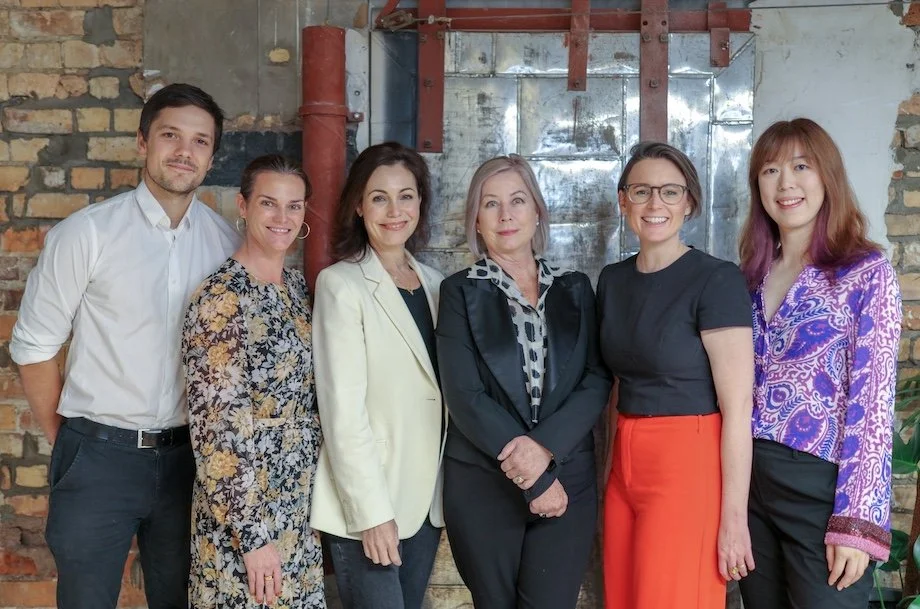
I recently joined Aimee McCammon, Managing Director and shareholder of Pic’s Peanut Butter, on Herald Now Business, where Garth Bray asked us to discuss succession planning.
Our businesses are very different, as were the paths we took. But the conversation reinforced something we both believe: succession planning is not simply about replacing the founder. It is about building a business that can thrive without depending entirely on that person.
There are many sound reasons why business owners sell shares or bring in equity partners. Some want funding to accelerate growth, enter new markets, invest in capability or make an acquisition. Others need capital to reduce debt or strengthen the balance sheet. And some founders want to realise part of the value they have created while retaining an interest in the company’s future.
There is no single correct model. For me, the end game was never simply to sell Pead and walk away. It was to share the responsibility, bring new skills and perspectives into the business, and secure its growth, independence and longevity.
Protecting what we had built
I founded Pead in 2000 and, like many founders, was deeply embedded in every part of the business. Much of the responsibility for its performance, client relationships, culture, reputation and success rested with me.
That can be an advantage in the early years. Founders bring energy, passion, personality and a deeply personal commitment to the business. Over time, however, dependence on one individual becomes a risk. A business that cannot prosper without its founder is inherently vulnerable and not as valuable as it could be.
We had opportunities to sell Pead to larger multinational organisations. But I was never convinced their ambition would be to grow Pead as Pead. In some acquisitions, the value lies in absorbing the clients, talent or market position, while they slowly cut off the oxygen of the original business (and its founder).
There were also approaches from people in the PR industry who hoped to “take the business off my hands” at a bargain-basement price. Why anyone would sell a successful business for less than it earns in annual profit remains a mystery to me. Those offers were easy to decline.
The interest did, however, confirm the value of the Pead approach to PR: create a great place to work, build great careers, deliver exceptional work and have plenty of fun along the way.
Too many NZ brands sell out too quickly and independence was part of the value I wanted to preserve, alongside our culture, standards and the opportunities available to the talented people already helping to build the agency.
Creating a pathway to shared ownership
Early in the process, I sought advice from Ken Makovsky, the award-winning PR guru who founded the New York firm Makovsky and Associates.
His advice was simple: treat every senior appointment as a potential future partner. If someone had no ambition to own part of the business, they might not be the right long-term hire for a firm planning an internal succession.
That advice sharpened my recruitment lens. It helped me build and develop a talented group of people who understood that ownership is not an entitlement. It is a commitment to deliver for the business, its people, its clients and fellow shareholders.
Once the right people were in place, I turned to Deloitte. The business was independently valued, and a model was developed that enabled Pead partners to acquire shares progressively. Each made a significant upfront investment, putting genuine skin in the game, and then used dividends to fund a staged buy-in.
The structure had to work for everyone. It needed to recognise the value I had created over many years while making ownership realistically achievable for the next generation.
Most importantly, the partners were not simply being asked to run my business for me. They were becoming owners of the business, with a direct stake in its success and a shared responsibility for its growth and future.
That distinction matters. Ownership is not simply a reward for past contribution or a share in future profits. It brings a responsibility to contribute to the commercial success of the business, achieve agreed financial and non-financial targets, lead people well, retain and grow client relationships, and be accountable when performance falls short.
Shared ownership works only when every owner accepts both the benefits and the obligations that come with it.
For me, it created a measured transition that suited the partners, the business and me.
Responsibility is now distributed across a broader group of owner-leaders with complementary strengths, fresh ideas and their own ambitions for growth. Each has genuine authority, but with that authority comes clear accountability for the performance of their portfolio and their contribution to Pead as a whole.
As Executive Chair, I retain a significant shareholding and continue to be involved in governance, issues management and complex client matters. The structure works well for me. I no longer carry sole responsibility for the success of the business, which means I do not have to work as hard in its daily operation.
It also gives me the space to focus on our family farm brand, Danbri Farm, and support my family with the delightful responsibility of helping to raise the next generation.
I still think about Pead and our clients every day, and I care just as much. Most founders will understand that changing a title or shareholding is far easier than changing the habits of a lifetime.
Succession is a process, not an announcement
One of the most important things I have learned is that succession cannot be achieved by handing over the keys on a Friday and expecting staff and clients to place their confidence in someone new on Monday.
Future leaders need time to develop commercial judgment, financial discipline and people leadership. Clients need time to establish trusted relationships with them. Staff need to see that the next generation has genuine authority, not simply an impressive title.
Founders also have work to do. We must be willing to transfer authority as well as responsibility.
That does not mean every client relationship can be neatly handed over. Some are built on years of shared history and highly sensitive work. In issues management, I know where a great many of the skeletons are buried, and institutional memory of that sort does not retire to the farm overnight.
But if the next generation is accountable for results, it must be allowed to make decisions and lead the business while protecting the qualities that made it successful.
Values should endure. Methods should evolve.
Start before anyone orders the farewell champagne!
Succession planning often begins too late, frequently because founders cannot yet imagine life beyond the business.
But without a plan, good people may leave because they see no pathway to leadership or ownership. Clients and colleagues may worry about continuity. The business may also fail to acquire new skills quickly enough, particularly in communications, where technology and structural change are rapidly rewriting how our industry works.
Eventually, the founder may be forced to make one of the most important decisions of their working life under pressure, which is rarely when any of us do our finest thinking.
My advice to other business owners is to begin before you feel ready. If you are waiting for a completely comfortable moment, you may be waiting until the departure bottle of vintage Krug has already popped.
Obtain an independent valuation. Identify the people who might one day lead or own the business. Begin sharing client relationships, knowledge and decision-making authority. Test whether your proposed ownership model is fair, commercially sound and financially workable.
Above all, do not begin by asking, “How do I get out?” Ask instead, “What does this business need in order to prosper beyond me?”
That was the question at the heart of Pead’s succession plan. The answer was not another version of its founder. It was a new generation of owner-leaders with the opportunity, authority and obligation to take Pead forward.
For me, that is the true measure of successful succession. It is not simply that the founder can step back. It is that the business, its people and its ambitions can continue to step forward while remaining true to what has been built.
That is how a founder’s legacy stops being something preserved from the past and becomes something others can continue to grow.