If AI Can’t Quote You, Do You Exist? The New Reality for Communications
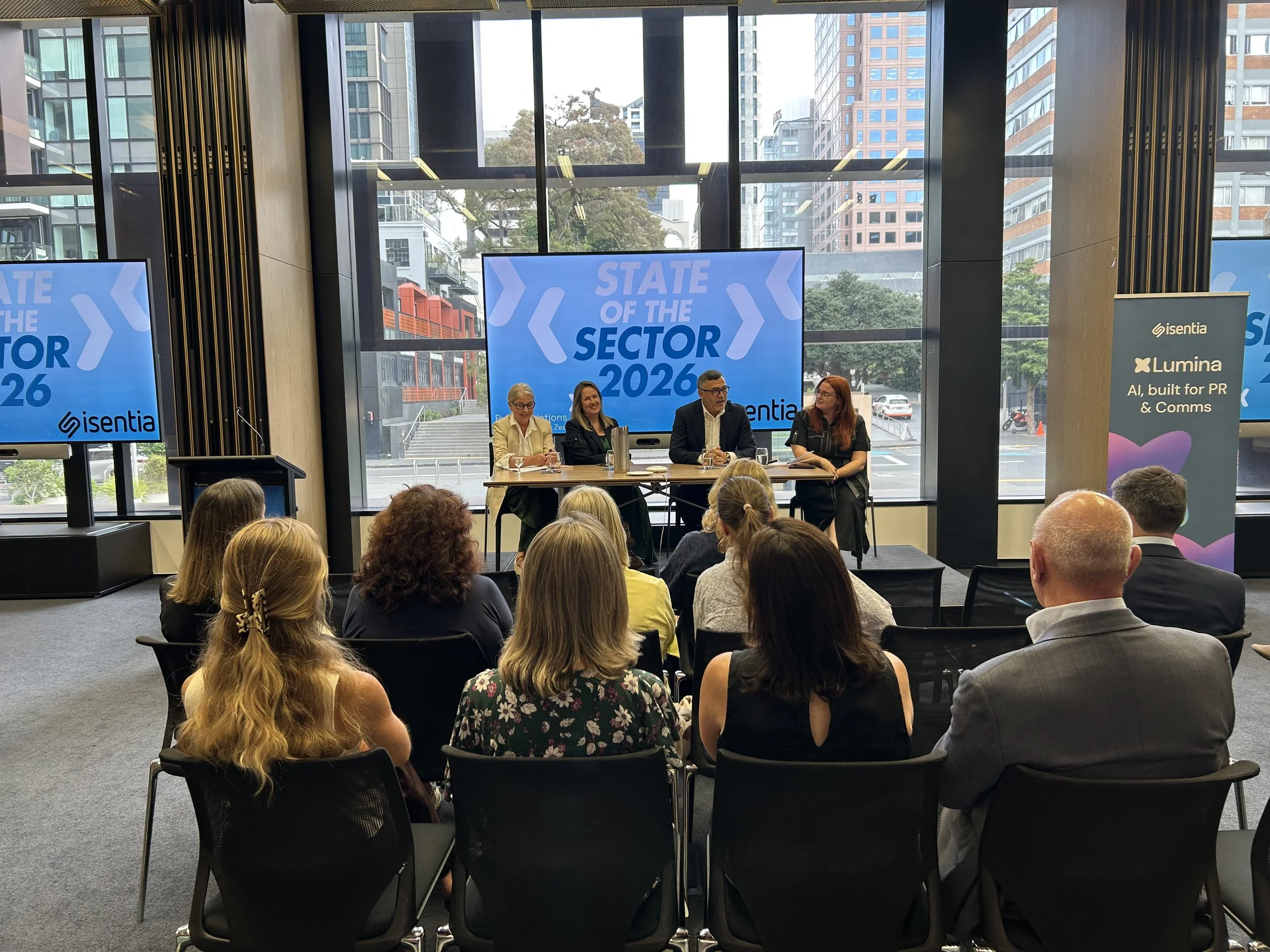
At the recent PRINZ State of the Industry session, I was asked to sum up where our sector stands. No small brief for a room full of communicators who are paid to have opinions.
We have navigated economic pressure, media contraction, cultural volatility and the meteoric rise of AI in just a few short years. The mood was thoughtful and unmistakably aware that something fundamental has shifted.
When asked for a headline for the State of the Sector, I offered, with apologies to the old tree-in-the-forest paradox, “If AI Can’t Quote You, Do You Exist?”
It sounds dramatic and it is meant to.
Because this is not a seasonal adjustment. It is a structural shift.
AI is no longer a tool sitting quietly on someone’s desktop waiting for instructions. It is reading, ranking, summarising and synthesising us in real time. It is shaping how reputations are discovered and understood.
AI is now a stakeholder. And unlike your board, your clients, or the media, it does not sleep.
If it cannot find you, reference you or confidently interpret you, then you are invisible in a layer of search and sense making that is fast becoming the first port of call for customers, journalists, investors and employees.
That is enough to make even the most robust among us pause, breathe deeply and take a swig of medicinal brandy.
And because AI is constantly scanning and re-presenting your organisation to your other stakeholders, you have two choices. Shape what it learns about you. Or live with whatever narrative it absorbs.
As I say to my girlfriends, “If you are not at the lunch, you are the lunch.”
Authoritative third-party coverage, structured thought leadership and disciplined narrative architecture now matter more than ever because they feed the system. Earned media does not just reach people anymore. It trains machines.
And that brings me to the perennial question of our seat at the table.
We have been talking about it for decades. Why does communications still struggle for full credibility?
In more than four decades in this industry, I have seen the pattern repeat from some organisations. Communications is indispensable in crisis and nice to have when its calm.
In an AI accelerated environment, it’s shifting and security now depends on how the function is defined.
If communications is seen as publicity, content and channels, that seat is fragile. AI is already automating large parts of that work.
But if communication is understood as a management discipline, the system through which meaning is made, decisions travel, trust is built and alignment happens, then it becomes mission critical.
So our sector looks contradictory right now. Some organisations are cutting communications budgets. Others are elevating the function to the board and treating it as a strategic problem-solving capability.
Our credibility will not be built on volume. It will be built on strategic judgement, evidence and commercial literacy.
Leaders do not need more noise. They need clarity.
The environment has changed. Attention is more selective, more fragmented and more sceptical. Earned media has shrunk. Brands have become publishers. Audiences operate in tighter micro communities. Meanwhile, generic AI generated content is flooding the market.
Which is precisely why we are seeing growth in Substack, podcasts and niche media. They reward credibility and consistency over scale. The fourth estate still matters enormously, but it is no longer the whole story.
The wins are happening in micro communities, owned platforms, direct to audience leadership voices and credible third-party partnerships.
Discoverability is the new battleground. And our stories now have to work for humans and for machines.
Think of it like compound interest. You are not just persuading a customer today. You are feeding a system that will summarise you tomorrow.
Then there is authenticity.
The word was in heavy rotation at the session. Understandably so. In a world saturated with flawless AI prose, human imperfection has become a mark of credibility. Our idiosyncrasies, the quirks of phrasing, the slightly imperfect sentence, the human rhythm and the occasional unfiltered, unrehearsed moment signals that there is a real mind behind the message.
Authenticity is not a brand filter. It is alignment. It is saying what you stand for and ensuring behaviour matches it.
The leaders who build trust speak in their own voice. They explain their reasoning. They admit uncertainty. They communicate early, not only when forced. They allow their idiosyncrasies to show because that is what distinguishes conviction from content.
And in an election year, I suspect we will all be listening more carefully. Not just to the words, but to the person behind them.
Because in the end, whether you are building a brand, leading an organisation or standing for office, if AI cannot quote you and if people cannot recognise you, you risk becoming background noise.
And none of us entered this profession to be background noise.